
In the practical pursuit of lucid dreaming, the seeker is swiftly met with a sobering truth: the vast majority of academic techniques offer little in the way of genuine utility. One soon discovers that grasping lucidity is less an act of scaling a mountain than it is a delicate dance on a slick floor, demanding a certain refined finesse rather than mere dogged persistence, and a sharp resourcefulness that renders heavy theoretical dogmas entirely redundant the moment success is actually tasted. Even after the first few triumphs of projection, it becomes clear that technical cunning is but half the struggle, requiring a grace of execution within an agonizingly narrow window of opportunity; for despite a curated repertoire of magical names, formulas, and instructions, the art of “surviving” within the astral theater often lasts a mere few moments, and during those initial dozens—perhaps even hundreds—of forays, maintaining one’s presence for more than ten fleeting seconds remains an almost impossible feat.
The archetypal nemesis of the astral projection experience is rarely a lack of occult lore or some hidden deficiency in power, but rather the simple, relentless scarcity of time. We find ourselves perpetually starved for it; whether we are laboring toward the Great Work, fulfilling the mundane duties of our Grade, or maintaining the disciplined stillness of Asana and Pranayama, time remains our most elusive resource. We are pulled asunder by the gravity of family, profession, and social obligation—seduced by a thousand clever necessities that conspire to distract us from the One-Thing-Needful. Even within the realm of a lucid dream, the moment mastery seems within reach, the physical body exerts its heavy pull, dragging us back to the waking world. Thus, the spiritual life begins to feel less like the promised fruit of the grimoires and more like the script of a cosmic comedy; for just as we align our lives to manifest the spirit, an eruption occurs in a sphere entirely beyond our control—the moment space is carved for ritual, a superior demands our presence, and the second we settle into our studies, the phone rings with a domestic crisis.
This temporal pressure presents itself as a divine paradox, the very seed of discord sown by the hand of Binah; through the thirty-second path of the Universe, time strikes with equal cruelty at both the inexperienced Neophyte and the long-practiced Aspirant. Yet, within this relentless assault, Binah, such a “Beautiful Enemy”, inadvertently leaves a gap for a swift counter-strike—a cuckoo’s egg planted by the Angel deep within the heart of our labor. While the Neophyte may be haunted by the shadow of the Vampire, they remain equally susceptible to the Vision of the Holy Angel, a vision that to the student of the Golden Dawn feels like a distant summit or a future goal of the Great Work. The Adeptus Minor, however, perceives the sublime trick: the very notion of “attainment” is a universal deception, for one does not achieve the Great Work so much as remember it. It is not a destination to be reached through the passage of years, but a primordial state to be reawakened—a victory won long ago, then merely hidden behind the heavy, shimmering veil of time. Our Aspirant need not remain a child — but to become one again. To become something which became earlier. To remain with the Beloved a few minutes longer means to return and meet them earlier — this is the only way of the Adept.
A relentless pressure haunts the lucid dreamer, acting as a corrective force that seeks to expel the practitioner’s consciousness as though it were a mere splinter or a grain of grit within the eye. This influence is so pervasive that, across thirty years of traversing these states, I have encountered only the rarest of projections where it was absent—those fleeting moments where a vision might unfold without faltering or the constant need for strengthening the vision. Yet, there exists a clever technique that reveals a unique dream territory, a specific plane on consciousness where this ever-present threat of snapping back into the physical frame simply vanishes; by projecting the astral body into the Inner Temple—a distinct region accessible through the “false memory” concept. While certain techniques can prolong the return to the body, from the very first seconds of achieving lucidity, the Aspirant is under constant attack by this force, much like an object near a planet is governed by the inescapable pull of gravity. Within the typical lucid dream, there is no way to fully bypass this law, and the practitioner is primarily defined by the exhausting struggle to maintain the astral form and prolong the experience for as long as possible. Lacking the strategic shortcuts I shared in my other post (Complete course in Astral projection/Lucid Dreaming), an Aspirant might spend years of effort without ever managing to stay conscious for more than a few minutes, and in most cases, the experience dissolves in just a few fleeting seconds.
My initial encounter with this entire concept occurred purely by chance during my youth, while I was first investigating the lucid dreaming; having possessed a natural skill for transfer of consciousness into the astral body, scrying, and lucid dreaming since early childhood, I maintained an awareness that remained intact through both the onset and the end of my sleep. During those early years, I would frequently plan my waking activities in school while still being in a dream scenario, and by the time I reached my early teens, the fundamental mysteries of the lucid dreaming had mostly been solved for me, leading me to test the boundaries of dream by pushing the limits of perceived time to see how long I could remain anchored while practicing basic rituals and meditations in a dream state. Also, in that time, I had mastered the practice of dreaming within a dream, a state governed by entirely different, almost mad laws of the mind—laws that were completely unlike those of a normal lucid dreaming.
Setting complex objectives and experimental milestones became a regular part of my practice as I continually sought to surpass my previous limits within the astral plane. One such endeavor was the construction of an imaginary library filled with records of my soul’s journey and its various incarnations. This particular technique was derived from a slim book on reincarnation by J. H. Brennan, which I acquired at my favorite occult bookstore.
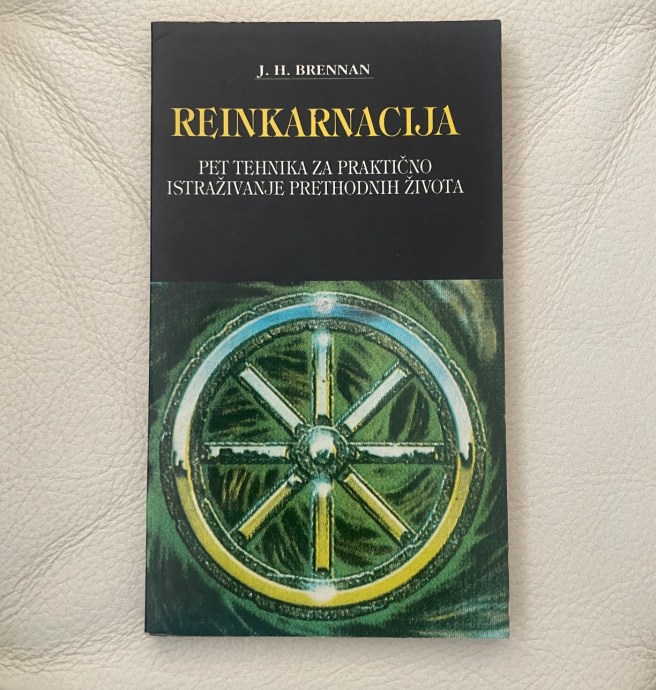
Despite its simplicity, the book offered clear and graceful guidance on how to construct a personal astral library. I adored that book so much; it was one of those pieces of literature I devoured as a teenager, the kind that built a beautiful bridge between my boyish daydreams and the serious study of magick. In the end, it turned out there was no difference at all.
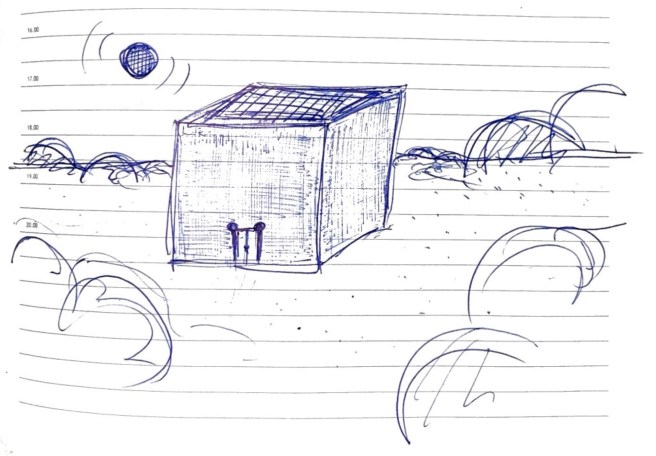
The exercise was very simple. At first, the practitioner was to choose the interior design of their astral library, and then, each day, imagine new elements and details, gradually building the library within their mind. I enjoyed this practice deeply, mostly because my visualization was naturally vivid and strong, and over time I began weaving in my own refinements to make the original method more detailed. It eventually reached a point where I could practice with my eyes wide open, letting the inner vision completely override the physical world as the library grew into a real sanctuary that I visited daily. I even began mapping the corridors and chambers on paper to keep track of the layout—a massive, matte black cube sitting in a desert with a very specific astral aesthetic and dedicated spaces for ritual work. I still don’t know why I chose that specific look, but at the time, I found something deeply personal and original in it—a feeling that it was something that would truly “work.” There was a strange sense of importance to it all, a feeling that this temple would matter later on, though I eventually let the project slip away after five months to focus on other occult paths. It stayed buried in my mind until I was nineteen and bought my first big wooden bookshelf, finally needing a place for the childhood books that had been overflowing into boxes and across the floor.
I practiced this exercise for a time, perhaps a few months, and then eventually replaced it with other practices that I was pursuing with great diligence at that period, devouring books on occultism and esoteric philosophy. As the years passed, I completely forgot about this technique, which at the time had seemed rather shallow and somewhat naive. In the years that followed, my work gradually turned toward more serious rituals and deeper forms of meditation.
One afternoon, as I was arranging my new book collection on the wooden shelves, a particular spark of inspiration struck me when I came across the thin manual that first introduced the inner library technique. Seeing the booklet again triggered a flood of nostalgia for the days when that exercise was the very core of my spiritual discipline. It was in that moment that I conceived a plan: to consciously project into that inner library during my next lucid dream, revisiting the exact mental construct I could still visualize with perfect clarity. That same night, I drafted a specific plan of action with the library visit as my primary objective, sensing deep down that this experiment was destined to steer my astral investigations toward a totally unforeseen horizon. There was an unmistakable weight to this intention, a feeling that distinguished it from the countless other fascinating goals I had previously set for my journeys within the lucid dream.
That particular night is etched into my memory forever: my consciousness separated from the physical body in the exact manner I had experienced thousands of times before, leaving me in the darkness, feeling my way along the walls as I moved away from the bed. Instead of just navigating the room, I made the conscious decision to visualize myself stepping through the threshold of my inner library, and within moments, the tactile sensation under my fingertips shifted entirely as my hands began to glide over the surface of polished, frigid marble. To stabilize the transition, I began rubbing my astral palms together as if to generate warmth, while simultaneously breathing onto them—an act that seemed to paint a brand-new reality into existence. Soon, the reflections and geometry of that familiar sanctuary began to solidify, and I found myself standing in the heart of my old library—my inner temple, completely stunned by a level of vividness I had never encountered before; it felt, in fact, as if both my waking life and my previous dreams were merely faded shadows compared to this intense, heightened reality. I immediately started testing the stability and depth of the environment by focusing my gaze on a single point, fully expecting the dream to colapse as usual, yet to my surprise, the scenery remained perfectly still without the slightest flicker of instability. The sheer solidity of the experience was shocking—I even pinched my own skin and felt a sharp, vivid pain—confirming that this was an entirely different dimension of lucid dreaming, possessing both immense depth and scope. My state of mind was uniquely transformed; although I was lucid, the focus was incredibly sharp, devoid of that underlying anxiety about being snapped back into the body that typically haunts such experiences. There was no longer a sense that I had to remain constantly active or perform “tricks” just to survive within the lucid dream; on the contrary, I was able to remain completely passive, soaking in every second of my presence in that divine atmosphere as a deep wave of nostalgia washed over me, realizing that those old exercises from my youth had left a mark on my soul far more significant than I had ever imagined.
I found myself within my inner library, in a distinct chamber of the astral, inner plane—more precisely, in a secluded region of my own mind that had long since transformed that childhood vision of the inner library into a true sanctuary, an inner temple. I remained there as minutes passed, yet the vision did not dissolve, nor did I return to my physical body. At one moment the thought even crossed my mind that perhaps I had died and had now permanently separated from my physical form. Never before had I experienced the astral in such a pure state—free of strain, free of the usual need for movement or mental effort that so often accompanies travel through that realm. This was a plane of pure existence, where only my essential self remained, without intention, without desire, without motion. Everything else moved except me. I was merely a witness within that divine movement, anchored and quietly nested in a corridor of the mind whose existence I had never previously known.
My research led me to formulate an entirely original principle of lucid dreaming: when you move into a location with a verified existence in the physical world, it activates a specific mental trigger resulting in a standard category of lucid dreaming; conversely, shifting your awareness to a place that is purely imaginary—and which you recognize as non-existent—engages a different process governed by a separate set of internal rules. A third possibility arises, however, when you target a landscape that exists solely within your recollection, yet you are recalling an old, phantasmagoric construct rather than an actual event, causing the mind to stall as it becomes unable to decide which laws of inner physics should apply to the manifested reality. In this state of cognitive suspension, a spectacular and miraculous type of lucid dream emerges, one that feels nearly eternal and grants the practitioner absolute sovereignty and crystalline focus. Constructing an Inner Temple is the key to this phenomenon—its nature is “neither-nor,” existing simultaneously as a fabrication and a lived truth, built from the intersection of genuine remembrance and creative visualization. By steering yourself toward a fantasy that lacks a physical counterpart but remains anchored in your mind as a “false memory,” you essentially exploit a psychological loophole; this specific glitch is what allows for the assembly of a truly peerless and stable astral experience. A very similar strategy awaits the Aspirant in the Abramelin operation, where everything one does is, in fact, a reenactment of a memory of something that never actually happened.
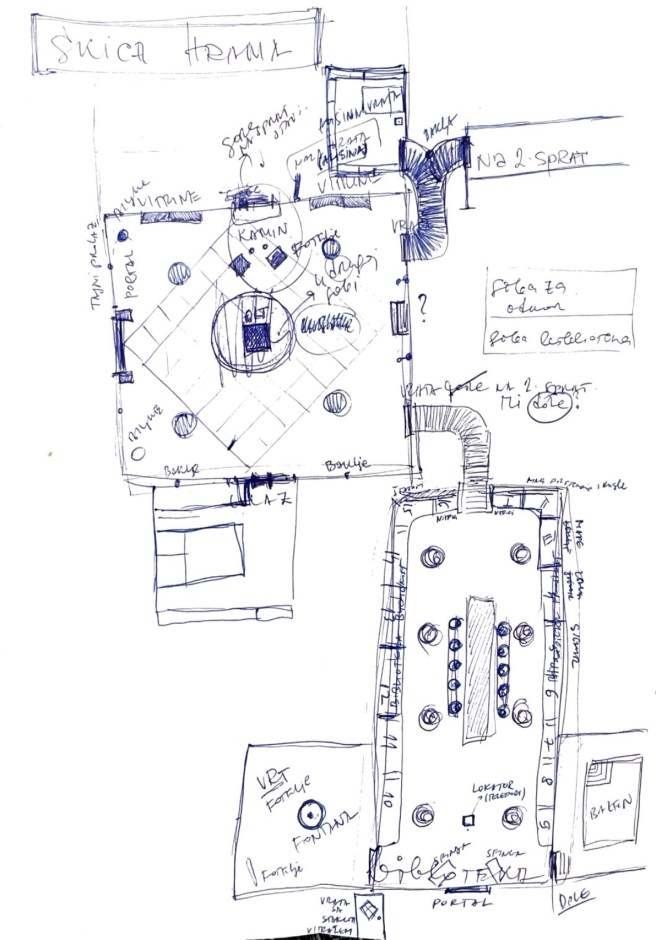
Following the brief account of my inner library—now more fittingly called my inner temple—and its potential relevance for the Aspirant, I will begin with a central observation: the concept of “inner temple” exists on an entirely different plane of lucid dream and a vastly elevated level of awareness. Residing within this space facilitates a duration of lucidity far exceeding any other technique; the sharpness with which it manifests in the mind is consistently superior, offering such a tangible and solid environment that the need for stabilization methods virtually disappears. Constructing this unique scenario requires a period of dedicated preparation where we focus solely on visualization rather than attempting actual projection—spending ten to fifteen minutes daily mentally traversing a location we have meticulously designed. Initial steps should involve sketching the desired layout on paper, defining both the exterior silhouette and the interior atmosphere. Should the design lean toward a Renaissance aesthetic, featuring heavy timber, ancient tapestries, and the glow of candlelight by a hearth? Would a minimalist approach be better, utilizing stone, wood, and translucent paper partitions? Or perhaps the architecture should be futuristic, defined by a sophisticated interplay of light and shadow? Drafting these plans on paper is just as vital as the mental imagery; the more we engage in this creative play, the deeper the blueprint becomes etched into the subconscious. My own temple evolved over time as I integrated specialized chambers designed to facilitate journeys into the deepest, most hidden layers of my soul. While every practitioner must architect their own unique inner sanctum, I will provide a description of my own to serve as a catalyst for your own inspiration.
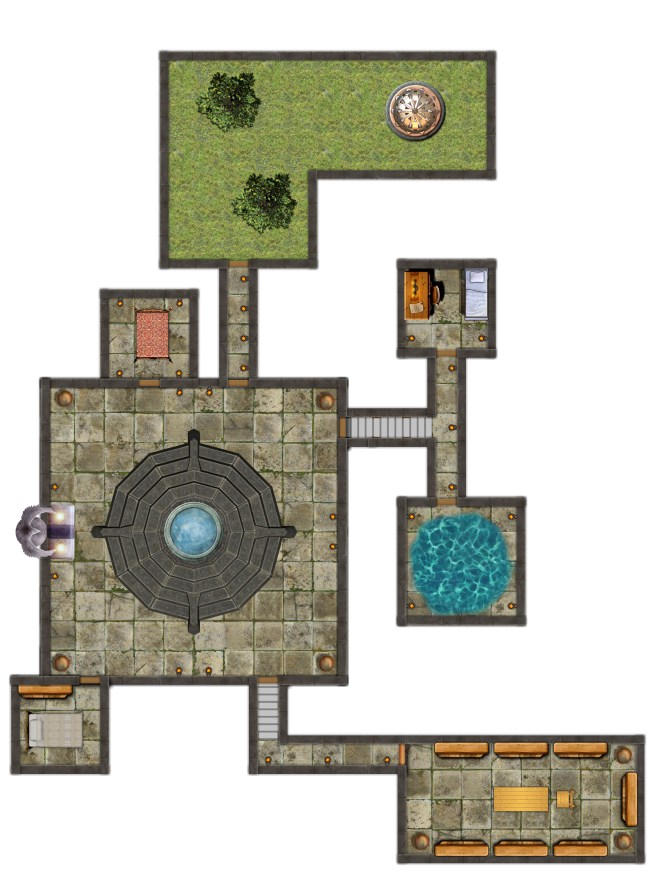
Looking at the lower-left part of the layout, you will see a representation of my physical bedroom, a space that sits right next to the edge of my inner sanctuary. This threshold is essential; opening the door to my room with the clear intention of entering my inner temple acts as a literal gateway to that higher plane. Setting this intention beforehand is crucial for any attempt at lucidity. I deliberately linked the inner temple to my physical reality, whereas my original temple was fully isolated, accessible only through two teleportation techniques. At first, I would either spin rapidly on my own axis or step backward through a doorway to arrive there. The second method included a key detail: I would draw my personal sigil on the door, acting as a mental code key that unlocked the part of my psyche reserved for the region of inner temple. Since this symbol was private and known only to me, it gave the mind a sense of legitimacy, reinforcing the extraordinary presence in the dream state. Later, I aligned the bedroom door directly with the inner temple entrance, allowing me to transition during the early void stage of projection, saving precious time of lucidity. Moving from my room in the bottom-left corner now leads immediately into the heart of the sanctuary, the largest and most important hall. A massive ritual circle dominates the center, with a towering portal to the west and four monolithic columns anchoring each corner. Large oil lamps cast a deep amber light across the chamber. This hall is designed for rituals and rites, entity invocations, and quick teleport through the western gateway. From this central space, several exits are available: two doors on the northern wall, one in the upper-right corner of the eastern wall, and another in the bottom-right of the southern wall.
Choosing the door in the upper-left corner leads to a minimalist chamber containing only a grand bed and torches burning in each corner. Functioning as the tantric chamber, this space provides an environment for sexual experiences within a lucid dream, a sensation so deep it defies any verbal description. Dedicated entirely to tantric exploration, the room allows a Goddess or priestess to appear simply by speaking her name before entering. Perhaps the most fascinating use of this chamber is summoning your own being in the form of the opposite gender to engage in self-union and inner exploration. Moving to the right, a door leads into a narrow corridor ending at a heavy wooden entrance. Flickering torches mounted on the stone walls cast a soft light as one moves along the passage. Passing through the final door reveals a vast and stunning open garden, where the ground is covered in perfectly maintained greenery. Two colossal, ancient oak trees dominate the space, serving as home to countless elemental and fairy-like beings. Interacting with these entities among the branches is always joyful, especially if one chooses to shift shape and shrink to an elven scale, a transformation most easily achieved within the ritual circle of the primary, central hall. At the far edge of the enchanted garden stands an observatory, used for both invocations and expansive journeys across space and time. Looking through a set telescope serves as a clever combination of lucid dreaming and scrying, especially when I need to observe a scene from a past life, childhood, a memory, or any element of the mind that I wish to awaken and consciously relive. At times, it is far easier and faster for me to witness an event through that telescope than to go through the process of teleportation and travel to another part of the astral plane, which consumes energy and thereby shortens the time I can spend in the astral. This outdoor area is particularly useful for practicing flight and non-physical movement, where motion is guided entirely by the mind rather than the body, a discipline that requires patience and focus to master.
A single entrance in the upper corner of the eastern wall leads to a rising stone stairway. These steps take you to a junction where the path splits into two separate corridors, each ending with its own doorway. The southern chamber is a perfectly square room containing a ceremonial pool, softly lit by oil lamps at every corner. This luminous pool serves as a sanctuary for full spiritual restoration, offering deep healing and a space for quiet reflection. Submerging in these waters allows the self to unify through energetic pulses, bringing a surge of vitality in just a few moments. One striking benefit is that the usual fatigue after a lucid journey is replaced by complete refreshment, making it easy to move directly into waking life. Additionally, the basin functions as a diagnostic tool, revealing the sources of physical discomfort and highlighting internal emotional blockages. The liquid is a remarkable mix of radiant light and water, carrying a subtle, revitalizing electrical charge. Stepping into it is intensely rewarding, leaving the Aspirant entirely renewed.
Taking a left at the T-junction brings you to a final door, which conceals a modest and compact chamber. This interior is furnished with a meticulously prepared bed situated across from a simple writing desk. Soft illumination is provided by torches placed in the bottom corners of the room. I consider this space to be of vital importance, as it is dedicated to quiet reflection, the transcription of insights, and the advanced practice of dreaming within a dream. Utilizing this method allows for a remarkable compression of time, often stretching the duration of a lucid encounter well beyond sixty minutes. On certain rare occasions, the experience has felt as though it spanned several hours, during which my awareness never once faltered or dimmed. Such a prolonged stay and the use of this specific technique generate an almost overwhelming level of vividness, a state so sharp and objective that it can sometimes be challenging to influence or alter. Without a doubt, this method represents a high level of mastery, one that might even be considered premature for this chapter, given that it naturally challenges several of the core principles established in these instructions. By employing a specific type of REM rebound and dreaming within a dream—in certain cases, I can experience a duration that feels like an entire day, measured by an internal clock, while in reality, the total time would amount to no more than forty-five minutes to an hour. Especially when supported by certain natural supplements, all of this can become an exceptionally vivid astral experience.
Lastly, the final exit situated in the bottom-right corner of the main ritual hall opens into a passage that slopes downward toward the library. Upon descending the staircase and making a left into a slender hallway, you step into a spacious, rectangular chamber lined with bookshelves. Heavy stone columns anchor the four corners of the room, while a sturdy wooden desk and a single seat occupy the central area. This archive allows me to locate any volume of interest and gather the specific data required for complex teleportation or the conjuring of entities. Scattered among the stacks are various occult relics, including alchemical tablets and elixirs designed to bestow powers such as levitation, calling forth spirits, or altering one’s physical size and form. Certain brews allow the Aspirant to absorb the very essence of a book without reading it; with only a few sips, the complete depth of its wisdom flows into consciousness, immediately revealing the truths hidden within its pages. This room represents the most ancient and essential cornerstone of my inner temple, the original seed from which the entire magnificent architecture of the temple first sprouted, created during my high school years. All other chambers were added later, but initially, my first inner library, which I visualized using the technique from a thin little book, was in fact this very space.
Each of these concepts was carefully incorporated into my inner temple, designed to function as tools for mastering and guiding my lucid dreams, forcing the subconscious to operate under a very specific set of regulations, laws that I have established, but which the mind fails to perceive as my own inventions. It follows these commands without hesitation, much like the physical body immediately and unquestionably yields to the pull of gravity. Such is the sophistication of this temples design that the psyche does not even recognize the structure as an extension of its own fundamental nature. Every detail within its walls exists for the sole objective of condensing time and bypassing the traditional limitations governing the lucid state.
Deciding if and how to build your own private sanctuary within the lucid dream is a choice that lies entirely with you. My purpose here is to highlight a specific mechanism, but the artistic direction—the decor, the structural layout, and the function of every corridor—is yours to determine. One essential requirement is that the temple must be constructed on the foundation of a long-lost fantasy, an imaginative scenario or daydream you cherished as a child. While modern updates and current modifications are fine, the base of the structure must remain rooted in that original, fictional memory. Do not focus on the location as it exists now; instead, try to recall the act of imagining it during your youth, as this shift in perspective is the most powerful guidance I can offer for bringing such a vast and vivid environment to life.
Building a chamber as vast as the entire Cosmos is entirely possible, providing a stage where you can witness the gnostic mass of the Universe and partake in a Eucharist of swirling galaxies and nebulae. You might prefer a more modest space, perhaps one designed to house a personal dragon or a room where you can nurture a miniature black hole. Every one of these feats can be accomplished within your inner temple instantly; in this realm, the mind is the sole authority, and the nature of your experience is entirely up to you.
For the purposes of this guide, our focus shifts to the tantric chamber described earlier, located in the top-left section of my inner temple. This space serves as a dedicated laboratory for sex magick and tantric experiments. You are free to design a similar environment within your own temple; whether it appears as a secluded cellar, a loft, or a glass dome offering an unobstructed view of the infinite heavens is entirely your choice. Regardless of the aesthetic, the essential requirement is that this zone be consecrated solely for these operations. Once you successfully project into this space during lucid dream, several practical techniques can be applied.
Within the mind’s labyrinth, the tantric chamber functions as a secluded playground—a hidden sanctuary resembling a sphere within a sphere, a dream nested deeply inside another. This environment ensures the essence of the tantric partner manifests with extraordinary depth and complexity. The resulting interaction becomes as enduring, productive, untainted, and sensorially rich as one could imagine. Much like the relationship between a shell and its pearl, the objective is to discover the internal tantric counterpart, summoning them through a highly specialized process. It is important to understand that these techniques for navigating and manifesting within the dream state are never conventional, linear, or constrained by ordinary logic.
Above all, you must avoid projecting your awareness directly into the chamber where you plan to meet your inner tantric counterpart. In my practice, I begin from the physical bedroom and move through doors that serve as a direct link to the southern sector of my inner temple. If the journey starts via teleportation from a different dreamscape, I make sure to arrive in the heart of the central hall, specifically within the ritual circle shown on the map. Once my presence is established there, I proceed toward the northern wall where the two main exits are located. The entrance on the left leads to the tantric chamber, and it is a strict rule that these doors remain closed until the moment of entry, for reasons I will explain later. Direct projection into this sensitive room leads to the usual flow of a lucid dream, often resulting in the collapse of the lucid state and a very rapid return to the physical body, therefore, my advice is to avoid entering that chamber through direct projection by teleporting.
The proper procedure is to first project yourself into the central room—or any other part of the temple—and only then approach the tantric room, always keeping its doors closed until you are ready to enter. Even if it seems repetitive, I must stress an essential and foundational technique for navigating lucid dreams—the method of shifting scenarios or teleporting within the lucid dream itself. This skill is so fundamental that it defines the very logic of movement embedded throughout the astral plane. Developing a deep understanding of this principle is crucial, as it forms the gateway to your constructed inner temple, where all subsequent tantric operations will occur.
Shifting the environment through teleportation is one of the main ways a practitioner frees themselves from the pre-written narratives of a dream. Within those standard scenarios, the dreamer often plays the role of a performer—necessary, yet ultimately scripted, as part of a pre-arranged theatrical scene. By exercising the power to teleport, the lucid traveler effectively erases the underlying code of the dream and replaces it with entirely self-authored instructions. This level of control offers great benefits, but it also carries risks, requiring the practitioner to use the method with extreme care.
Dreams exist as a form of augmented reality; they lean on the physical world without being strictly bound by its frame. This state constantly challenges reality, acting like a sensory stimulus demanding an immediate, reflexive response—much like an itch that compels a hand to scratch. It subtly intrudes upon our awareness, following a hidden set of rules where the shadow self dictates the conditions. Within this space, we enjoy a deceptive sense of freedom, as long as we do not violate the core principles of that world. We can enact any fantasy inside this cage, yet we are forbidden from crossing its invisible boundaries. Lucidity, the emergence of true consciousness within the dream, is treated by the subconscious as a hostile invader, a thorn it seeks to remove with relentless efficiency. Every dream arises from necessity, serving as both the origin and echo of the dreamer’s circumstances. The routines of waking life and anxieties about the future form the boundaries that tether the dream world to a predictable framework. While we may act chaotically within the dream, our behavior is still confined by the mental structures we recognize as reality. Escaping the established dream scene is as difficult as abandoning a job when one has a family to feed or traveling the world on the eve of a wedding. Our waking lives are often more restrictive than our dreams, yet the dream-self is shaped by the same limitations. The sense of freedom in lucid dreams comes only because the mind experiencing it is not the full, true Selfhood.
The reactive mind is conditioned to govern the dream state much like politicians manage the physical world. In elections, the real power lies not with those who vote, but with those who count the votes. Similarly, the challenge in lucid dreaming is not whether we can brake the rules, but how to bypass them. Everything that seems irrational in waking life becomes coherent and tangible within the dream. To navigate this, we must adopt a perspective that belongs to no one, one that is entirely outside ordinary ownership. Success depends on imitating the rules of a game that has never been contested, following principles that have never officially existed.
The flow of a dream is fundamentally tied to the practitioner’s movement through it. A dream is hollow without the one who dreams it. No dream can exist without its host; this is the essential truth of REM sleep, which, despite its brevity, contains pathways leading far beyond the dream’s initial limits. Within these hidden channels lies the focus of our practice, following the winding tributaries of the True Self. Accessing them requires embracing abstraction and illogical methods, traveling along paths without signs or names. This is the essence of teleportation in the lucid dream. Teleportation occurs whenever the environment shifts so quickly that the reactive mind cannot react or impose a new narrative. We enter the void between realms, the liminal plane between worlds, gaining a decisive advantage over the subconscious, which cannot legislate what has vanished from its control grid. This fleeting interval allows the practitioner to gaze into the deepest depths, finally spotting the specific starfish, the hidden chest, or the wrecked ship that holds the map of their lifelong quest.
Engaging with the mechanics of teleportation teaches the Aspirant that any stagnation in form, motion, focus, or thought acts like poison to the lucid experience. Success relies on continuously inventing new methods, actions, and motivations that keep the practitioner resilient against the currents of the mind. These internal tides act like a potent drug, quickly building an immunity that renders techniques that were once thrilling or effective almost useless. Constantly cycling through different approaches is the only way to stay sharp. No fixed schedules, rigid patterns, or established rules should govern this work. Like a child, the practitioner must play for the act itself rather than for the objects; once a toy is crafted, it must be discarded to make room for the next. True dedication is found in the play rather than in effort, and it requires the willingness to forget whatever was successful or correct only yesterday. Concerning astral projection and lucid dreaming, it is a harsh reality that any method that succeeds today will fail tomorrow if repeated identically. Building the capacity for total improvisation and intuitive action is essential. Under no circumstances should one become a slave to a system or a fixed form, as rigidity becomes a cruel stepmother to all genuine achievements in lucid dreming.
To leave a dreamscape that the mind has already anchored, one must abandon all conventional hallways and logical exits. Every element of the environment, including the guardians of that reality, now opposes the traveler, as the mind instinctively seeks to eject the dreamer back into waking life at the first sign of a standard escape attempt. This instinct serves as a final defensive perimeter unmatched in ordinary existence. Preventing this forced awakening is the primary objective, requiring vague and irrational methods, tactics so fluid that the mind cannot recognize them as patterns or develop a psychological antidote.
The first step toward mastery is establishing a clear motive for teleportation. Treating the lucid dream as a high-stakes, time-sensitive environment ensures that every second is dedicated to a pre-defined objective, streamlining the attempt. Most practitioners spend the initial moments drifting in the void, waiting for a vision to coalesce before sharpening the dream’s resolution. Teleportation, when precise, shocks the psyche, forcing it to rebuild a functional reality and its laws from scratch—redirecting mental energy from monitoring the dreamer toward constructing the world. Two main advantages follow: first, immense time is saved, as the traveler bypasses irrelevant scenery to arrive exactly where their ritual or work is meant to occur. Second, the abrupt shift often triggers a surge of clarity, stabilizing the newly manifested environment.
Despite this natural boost, the practitioner must reinforce the scene through physical touch, focused observation, and rapid shifts of attention, just as with the initial vision. Many methods exist for this purpose, and their effectiveness varies widely; what works as a master key for one may be useless for another. As the mind adapts, even seasoned techniques can lose potency, requiring constant evolution of strategy. Studying different approaches reveals the logic behind the “escape,” providing a blueprint for creating one’s own exits from the dream’s boundaries. Above all, teleportation demands peak clarity; even a slight lapse in consciousness during the transition can dissolve the dream and return the practitioner immediately to the physical body.
Success in teleportation depends on a strong, singular desire to leave the current setting and appear at a chosen destination. This intense focus should be maintained only for a few brief moments before the physical mechanics of the transition begin. Verbally stating the target location is highly recommended, as speaking directly influences the flow of astral perception. Although lungs, vocal cords, and breath do not exist in the dream state, the mind remains conditioned by them and projects a reality where they function. Using spoken language becomes a perfect vessel for the practitioner’s Will, a technique that proves especially valuable during invocations and evocations. Once the intention is set and the command is spoken clearly within the dream, the practitioner begins to spin rapidly around their own axis. This rotation, often aided by extending the arms to shoulder height, must accelerate until the environment blurs and dissolves into abstraction. The maneuver triggers a massive shift in awareness and should last between five and ten seconds—never longer—before coming to a sudden, deliberate stop. With consistent practice, this abrupt halt deposits the traveler at their intended destination. It is rare for this method to work on the first attempt, yet one must strictly avoid repeating it twice in a row. Just as daily lucid dreaming practice can lead to burnout, teleportation should be limited to once every two days to prevent it from becoming a mundane habit. Repetition breeds predictability and logic, forming a rigid structure that the awakened spirit, finally free in its natural element, cannot tolerate.
Complexity characterizes the second method, though it shares the same foundational prerequisites as the first: an intense yearning for a specific destination combined with a vocalized command of where one intends to arrive. Immediately after the declaration, the practitioner must launch themselves skyward like a projectile, taking care to strictly avoid any downward glance. The success of this maneuver depends entirely on maintaining the eyes fixed on the zenith, following the complete upward trajectory of the flight. Once the initial catapult force reaches its apex, a gradual descent begins, during which the traveler will eventually make contact with the intended site. Diverting the gaze in this manner functions as a sophisticated mechanism for restructuring dream reality, much as the general technique of shifting focus is vital to maintaining lucidity. It is essential to maintain this upward fixation throughout the entire descent, ensuring that the horizon and the landscape below remain fully obscured. In the lucid dream, the gaze acts as a structural glue, conditioning both the architecture of the environment and the duration of the projection itself. One can compare the dream gaze to the breath in our lungs; it requires constant motion and replenishment to sustain the life of the experience. Ordinarily, the eyes must remain restless, driven by the practitioner’s enthusiasm, never lingering on a single point for more than a second. This particular method, however, employs a deliberate and strategic fixation—a blind spot created by refusing to perceive the world below—which allows the True Self to manifest the desired reality. It serves as an ingenious flanking maneuver against the reactive mind, which is designed to maintain control through frontal, logical observation rather than through the peripheral or unseen.
Both of the previously described strategies are inherently abrupt and invasive, often demanding a significant period of practice before they become consistently reliable. A third alternative exists, which may prove far more effective for many—a gentler technique that aligns more closely with the fluid logic and natural rhythm of the dream state. Because of its subtlety, even inexperienced Aspirants can achieve success with this method relatively quickly. While it requires a slightly greater investment of time during the dream itself, this minor commitment is far preferable to the total collapse of the experience, which often occurs when beginners attempt the more disruptive forms of travel.
Leveraging a particular kind of cunning, this strategy uses the dream’s own infrastructure—doors, windows, or even mirrors—as portals to our goal. Every threshold in the astral landscape can become a gateway if handled correctly. Imagine standing on a dream street where a suitable entrance lies just ahead. Approaching this exit requires a delicate touch once the vision is stabilized and the decision to leave is made. Speed is the enemy here, as rushing alerts the dream’s defenses to our intentions. Success depends on adopting a mask of innocent curiosity, perhaps marveling at the craftsmanship of the door or wondering who might reside behind it. These objects exist as part of the sleep mechanism’s pre-set script; by playing along, we bypass the mind’s surveillance. Every movement made during lucidity must feel casual and unhurried to avoid triggering psychological rejection. If our actions seem deliberate or calculated, the mind will recognize the intruder and collapse the experience. Maintaining internal silence and emotional neutrality is the only way to ensure the transition goes unnoticed.
The ultimate goal is expectation, not desire. This is crucial. We must expect something behind the door, never desire it. We move through the dream with a naive, childlike attitude—perhaps the most important tactic for lucid dreaming. Everything that follows in the dream is based on expectation, not fascination. Expectation, not fascination. Like seeing a brother behind a door and simply saying, “Hey, I see him, let me say hello,” or encountering a white rabbit in a suit and thinking, “That is peculiar, let me follow it,” in the spirit of Alice in Wonderland. Approaching the door while naively expecting something triggers a critical moment in teleportation. We must quickly merge the idea of the door with the idea of the destination itself. This is most easily done by speaking the destination aloud, as before, or by tracing a symbol of the destination on the door with a finger. Finger-drawn symbols are especially useful when entering Tarot, Tattva, elemental, or planetary realms.
Now, this is important: the procedure ends with an apparently trivial action—we must never open the door frontally, as this would prevent the scene from changing and allow the dream’s defense system to keep us in the current location. Opening the door head-on activates an automatic mechanism that projects something expected behind the threshold, like a familiar corridor, rather than the new reality we want. Executing this shift requires a movement that is both strategic and swift; the door must be opened from a backward position, keeping our back toward the threshold. By reaching behind to grasp the handle, we ensure the new scenario remains unseen as the door swings open. According to the informal laws of the lucid dream—which dictate that light switches rarely work—any door approached this way will always be unlocked. We then step backward through the frame, maintaining the reverse orientation the entire time. Closing the portal behind us before glancing at the new environment is essential for stabilizing the intended reality. Only after the door is firmly closed do we finally turn to face the surroundings. The secret of teleportation lies entirely in this single, fleeting pivot and the illogical nature of the act; everything preceding it is merely preparation for this simple maneuver. Completing the turn severs our connection to the previous dream scene. Upon halting, a completely transformed landscape stretches before us—the exact destination we willed into existence.
A concluding insight into the craft of teleportation involves utilizing the “postcard” technique. Rather than searching for a physical door to reach your inner temple, simply locate a postcard I have sent you from my inner temple, tucked away in the right pocket of your astral clothing. Accepting the premise that this card is always present in your pocket creates a reliable mental projection that functions indefinitely. Upon entering your next lucid dream, simply reach into that specific pocket. The physical action of reaching will trigger the immediate manifestation of the desired card. Once retrieved, cast the postcard onto the ground and leap directly into the image, just like in my favorite childhood film, Mary Poppins. This method provides an exceptional means of rapid transit, particularly for accessing the inner temple, traversing Tarot archetypes, or exploring the elemental Tattva planes.
Harnessing the power of teleportation is highly effective for altering the dream environment and intensifying the lucid state, often resulting in heightened clarity and sharpened perception. Nevertheless, this sudden departure from the mind’s pre-written script can occasionally disorient the cognitive faculties, sparking a sense of confusion or panic as the consciousness breaks free from its structural prison. The dreamer—likened here to a “sleeping beauty”—discovers herself in a uniquely enchanted realm of pristine alertness. In this state, the quality of awareness flourishes, becoming far more radiant and significantly less clouded by the heaviness of dream.
Choosing the door-and-reverse method remains the most reliable strategy for entering the tantric chamber. Using the space behind the dreamer consistently proves superior for all manifestations—from evoking entities to teleporting—because the forward-facing environment is often too firmly anchored to bypass. That hidden zone trailing us is a magnificent, enchanted space for magical work, safely beyond the reach of rational expectation. Regardless of the structure or brilliance visible ahead, the rear remains vast and unfathomable, where the environment stays fluid and shrouded in shadow. This absence of light and definition provides the perfect medium for any form of occult manipulation or creative exploration. Since one cannot truly get lost in a void where boundaries do not yet exist, venturing into this darkness almost always ensures success in these specialized astral endeavors.
Before opening the entrance to the tantric chamber and crossing the threshold backward, one final preparatory step is required: audibly speaking the name of the partner we intend to meet for sex magick. This must occur before approaching the door in reverse. When naming the tantric counterpart, the tone should avoid forceful summoning or intrusion; it should act as a gentle reminder of the presence we anticipate, fueled by a spirit of eager curiosity. This call is playful, like a lighthearted game of knock-knock with someone already waiting inside. By using the name in this way, the Aspirant recalibrates their mental state just moments before the transition. The utterance functions as a secret code or subtle whisper that triggers a delicate internal mechanism. It must be audible enough to anchor focus but soft enough not to alert the dream’s defensive corridors. Any sudden or harsh sound can make the subconscious react as if pricked by a thorn, ejecting the dreamer from the experience and returning them to waking reality like an uninvited guest.
Having spoken the name once—never repeating it—the moment arrives to cross the threshold. Direct entry is forbidden; instead, the practitioner maintains a reversed posture, reaching behind to operate the handle while keeping the gaze averted from the interior. The chamber is entered while moving backward, ensuring the transition remains hidden from view. Once fully inside, the door now in front must be firmly closed, and only then does the practitioner pivot to witness the manifestation. In that instant of turning, the Aspirant immerses fully in the experience of transformation and bliss that the mental projection has already established. This realization is happening right now, even as your eyes follow these words.
To make the process clear, here is a full recap of the procedure: first, teleport from your current lucid setting to an inner temple or transitional space, avoiding a direct jump into the tantric chamber. Upon reaching the sealed entrance of that room, pause and say aloud the name of the being or entity you intend to meet. Instead of touching the handle normally, which your subconscious expects, turn your back to the door and reach behind you for the latch. Open the portal while still facing away, allowing for a reverse entry. Step backward over the threshold and immediately shut the door, which will now be directly in front of you. At this point, the interior remains hidden from view, existing in the blind spot behind your shoulders and safely beyond the reach of your inner critic or reality censor. Even as you visualize these steps, that censor attempts to find a flaw, yet this backward positioning keeps the manifestation beyond its grasp. Only once the door is firmly closed do you turn to meet your chosen partner, whether their essence is planetary, elemental, or of another origin.
Among the many possibilities for a tantric partner in a lucid dream, two deserve particular mention, as they have consistently provided deep inspiration. The primary option is to invoke the Holy Guardian Angel—alternatively seen as your inner self, highest divinity, or Goddess—representing the purest, most sacred essence. This sets the stage within a specialized layer of lucid dreaming where awareness functions on a unique threshold, separate from both waking life and ordinary lucidity. In this liminal space, one engages in a sexual and intellectual fusion with an entity acting as a universal arabesque, a form through which profound communion becomes possible.
Returning from such an encounter and resettling in the physical body consistently produces an intense yet pleasurable fatigue. Practitioners often wake with an intense thirst and a lingering, peculiar nostalgia. The sensation mirrors the emotional residue a child feels after a nightmare—it remains vivid even after waking. In this case, however, the emotion is not fear but a potent sense of something ancient resurfacing. The Aspirant is captivated by familiarity, sensing they have experienced it long ago, yet cannot logically explain when or how this bond was formed. It is like reconnecting with a lost friend from a past incarnation or a childhood love, an encounter tinged with delirium and infatuation. This emerging sense of antiquity following a tantric union with the Angel is especially significant for those at the Zelator grade. Even as a Neophyte, one may catch fleeting glimpses of their Angel—a sudden flash of memory or sensation that pierces the conscious mind.
Another immensely powerful practice is to achieve a tantric union with your own self, expressed either in the same or opposite gender. By projecting your full personality exactly as you know it, but infused with the energy of the opposite sex, you create a scenario so precise that it inevitably produces an elevated state and deep insights. A variation of this technique is to summon a version of yourself from a distant future incarnation, which acts as a catalyst for consciousness, unlocking channels of knowledge and abilities the mind usually keeps hidden in its secret corridors. When this intent is energized with sexual force, it breaks down the mind’s habitual defense and control mechanisms. By introducing this intention within a lucid dream—speaking your own name with the firm will to meet yourself in the tantric chamber, then performing the backward-walking method—you leave the mind no choice. When you finally turn around, it is completely unprepared, yet still compelled by the command you issued moments before, opening a direct channel the mind cannot assess or block, because it has no precedent or protocol for an experience so radically beyond anything it has encountered before.
While I consistently advocate the backward-walking technique within the inner temple’s tantric chamber for sex magick, there exists a secondary, remarkably effective method that shares the same underlying principles. This alternative approach is sufficiently versatile to be employed at any point within a lucid dream, bypassing the necessity of entering the formal tantric chamber entirely. Though the sensory clarity, emotional intensity, and overall potency of a sexual act performed within the dedicated temple space remain unparalleled, these workings can nonetheless be achieved elsewhere, albeit with reduced force and a shorter duration.
At this juncture, it is appropriate to revisit the technique for summoning entities within lucid dreams, as outlined previously in the Neophyte guide: one must never look forward or rely on logical expectations, for the mind often exploits such foresight to engineer failure. Instead, the key to a successful invocation always resides behind us, in the space at our backs. I have witnessed countless fledgling Aspirants falter by applying the same flawed strategies to tasks that are straightforward when executed correctly, particularly in relation to teleportation and the summoning of beings within the lucid state.
The initial step involves simply vocalizing the name of the Goddess, priestess, or entity you wish to encounter, serving solely to focus the Will. Immediately following this utterance, the practitioner must begin a deliberate 180-degree rotation in either direction. The true invocation is activated at the very onset of this physical turn, igniting a state of anticipation and longing. In that brief instant—after the intention has shifted, yet before the body has fully rotated—the Will constructs the manifestation you are meant to receive. You may be startled, as the being appears directly behind you, circumventing the reality censor, that vigilant mechanism designed to filter anything challenging or incomprehensible from your forward view. This internal censor functions as a protective barrier, intended to keep the inner star-child safely confined while shielding it from the expansive explorations it is truly capable of undertaking.
As we rotate our gaze, we begin to perceive the light once hidden in the neglected recesses of the mind. Much like an abandoned childhood toy overshadowed by newer distractions, it shines now simply because we have directed our attention toward it; it has persisted patiently throughout our journey. At this moment, we recognize the brilliance we have always sensed but never fully comprehended, now manifesting tangibly in the form of the being whose name was carefully whispered to avoid alerting the mind’s internal sentinel. Had that guardian been disturbed, it would have banished the vision deeper into the recesses of denial. In surrendering to this process, we yield—to the Tantric experiment, to the higher Self, to the Goddess, or to the priestess who now serves as an avatar of our own consciousness.
Practitioners must avoid becoming fixated on the specific form or procedural details of Tantric acts and rituals within the lucid or astral realms. These ceremonies do not require the same physical execution demanded on the material plane; it is sufficient to recall a past performance and concentrate solely on the essence of the ritual, without enactment. Vibrating a single divine name with the intent to fully realize the rite is entirely adequate, as the mere memory of a ritual in this state triggers its instantaneous completion. Within lucid dreaming, where perceptions of time and focus shift radically from the physical world, notions of failure, fatigue, or lapses in concentration simply do not exist.
Visualizing the exact burning lines of a pentagram is unnecessary within the lucid realm. To perform a pentagram ritual here, it suffices to recall the essence of a previous enactment—a gentle memory of its time and place—rather than forcing a rigid visualization. Remarkably, the atmosphere itself manifests the symbol in the chosen flame or color, appearing with the clarity of one drawn on paper. Ultimately, it is far more effective to cultivate a personal magical gesture or word that, when employed, instantly unleashes the full power of a ceremony that would normally take hours in the physical world. In this state, “performance” has no relevance; there is only realization. While performance functions as a cumbersome egoic tool in physical time and space, the lucid dream state bypasses the process of becoming. Here, there is only being, and instead of time or procedure, there exists only realization and the immediate moment.
A particularly potent method involves integrating the Enochian system with the summoning of entities within the inner temple. By selecting a specific intelligence and reciting its corresponding Enochian keys in order prior to sleep, the energy of the invocation is imprinted, naturally shaping the dream’s structure. After this preparation, one projects into the inner temple’s tantric chamber, where the invocation is completed by vocalizing the name of the Enochian intelligence while facing the door. One then turns and enters the chamber backward, following the exact protocol described earlier.
An alternative method involves reciting the Enochian keys directly within the tantric chamber once lucid projection is established. As with other rituals in this state, the emphasis is less on literal recitation and more on evoking the memory of performing them physically. This proves especially practical since most practitioners cannot recall the full texts verbatim while dreaming. A focused intention, paired with awareness of the keys’ sequence, is sufficient. Concentrating on the number of a key without knowing its full content, followed by vocalizing the entity’s name for the tantric union, triggers the process before executing the standard backward-turning maneuver.
Engaging in a tantric relationship with Enochian intelligences carries a distinct character, often entwined with vivid, nearly apocalyptic scenarios and communications delivered through elevated prose or poetry. In these encounters, the entities act as mentors, revealing profound lessons vital for the Aspirant’s spiritual development. Even physical sensations and sexual contact transform into a subtler, refined dimension; the union may become so abstract that it manifests as the wind brushing grass or a celestial rain upon the universal cortex, transcending conventional sexual forms. When a more familiar form is retained, the intensity remains extraordinary, producing orgasms that resonate far more powerfully and endure far longer than those experienced in the physical body or with non-Enochian entities.
Regardless of whether the invocation calls forth the Holy Guardian Angel, a spiritual counterpart, a future self, or any other intelligence, each encounter yields profound, singular insights. This demonstrates that elaborate narratives are ultimately secondary to the living wellspring of the practitioner’s own experience. The Aspirant must recognize that every distinct character and interaction converges into a single, recurring event: the meeting with one’s own Selfhood. Each being encountered serves merely as a mirror of that internal essence. One should approach these experiences as if viewing old childhood photographs—though the exact moment may be forgotten, the recognition that the subject is undeniably you remains absolute. This bond feels at once distant and deeply intimate, forming a bridge that reconnects you to your authentic Being.
Tantric union within the inner temple has an even more exalted variation, though documentation and detailed research are scarce. Based on my practice, this method remains in the process of final synthesis. I am not yet ready to reveal full conclusions, but plan to present them alongside other significant findings on lucid dreaming and astral projection. This advanced technique involves navigating a dream within a dream, activating an entirely unique psychological mechanism. The sensations and experience of intercourse in such a layered lucid scenario surpass the intensity and depth possible even in the physical body.
It is worth noting a point that, under normal circumstances, would serve as an opening instruction due to its significance in tantric work within the inner temple. Its placement here is deliberate, following the presentation of radical concepts already permeating the reader’s deeper consciousness and bypassing internal filters. By introducing it at this stage, the primary “beasts” of the subconscious have already been engaged, allowing this essential insight to embed undisturbed in the deepest layers of being. This concept is intended to take root in profound darkness, beneath surface-level distractions of the mind. It is a fundamental task for the Zelator to explore stagnant internal depths and confront the formidable aspects of the Self that reside there.
To ensure the success of these strategic maneuvers in the inner temple—whether summoning a sacred partner in the tantric chamber via the backward-walking technique or invoking directly from behind—each intention must be explicitly recorded in an action plan. This functions as a literal agenda for your movements within the lucid dream and should be transcribed onto paper and kept bedside before sleep to embed the sequence in consciousness. Another effective variation is to place this written plan beneath your pillow, further anchoring the physical document to your metaphysical intent.
The dream state provides an ideal conduit for the movement of sigils, as we are inherently immersed in the very realms these symbols are meant to inhabit. Within this domain, sigils behave like returning eels, merging seamlessly into a wellspring of action that transforms Will into tangible desire. This environment is the natural habitat of every power capable of enacting such transformations, yet success depends entirely on disciplined guidance. Any attempt to manipulate this force through logic or excessive caution prematurely grounds the energy, causing it to dissipate and the intended outcome to wither before fruition. The most crucial aspect of working with a sigil is its integration into the lucid dream scenario, allowing the subconscious to receive it as a perfectly structured blueprint for manifestation.
My preferred method involves drawing the sigil directly onto the paper containing my action plan, then conceptually transferring that physical object into the dream by reaching for it in my right pocket once lucidity is achieved. This simple act reliably projects the desired object into existence. Holding the paper, I enhance my visual clarity to its peak and teleport far into the past, specifically to a bank where I maintain a private vault. I navigate the labyrinthine security corridors of the basement until I reach my personal safe, unlock it, and deposit the sigil. Afterwards, I return to my physical body, allowing the lucid sequence to fade into complete forgetfulness.
Another exceptional method involves the pool of radiance within my inner temple. After manifesting the paper from my right pocket, I teleport to the temple’s pool room and cast the sigil into the water, where it dissolves completely into cosmic energies, completely decomposing within a vast and luminous sea of light.
Additionally, utilizing a small meditation room equipped with a bed within the temple is a highly effective alternative. In this scenario, after manifesting the paper, I place it beneath the pillow in that dream-room and attempt to fall asleep while still within the lucid dream. This layers the experience, embedding the sigil’s intent deep within the primary currents of the subconscious nature.
Another effective method involves the previously mentioned meditation room with a bed inside my inner temple. In this case, after bringing the paper with the sigil into the dream, I place it under the pillow and try to fall asleep while being in a dream. This creates a layered effect, allowing the sigil’s intention to sink deeply into the subconscious. Falling asleep within the dream helps the desire feel more real and lasting, embedding it naturally into the mind so it can influence later dreams and states of awareness.
This is a somewhat clumsy translation of my first text on the subject, written over twenty years ago, which I later incorporated into my comprehensive and detailed post on lucid dreaming and astral projection, and eventually into my book “Sleeping Self – A Lucid Dreaming, Scrying, and Astral Projection Manual.” In it, I explored many other methods and techniques for out-of-body experiences.
Frater 273
You might also enjoy:
- Implementation and Integration – Concrete strategies for integrating spiritual practice seamlessly into daily life.
- Sex magick – Transforming sexual energy into spiritual work within Thelemic practice.,
- Magical Retreat – How intensive retreat experiences foster personal development and enhance self-awareness.
- On the Dwellers of the Threshold: The Vampire, Kundry, and the Shadow – Understanding the inner challenges and mental “gateways” that Aspirant face on their path.
- The Holy Guardian Angel – An exploration of the traditional Thelemic practice of angelic communion and its deeper spiritual significance.

 Frater 273 | Reflections on Thelema
Dude I think you posted this while I was looking for your most recent post. I saw Dec 25 and read that and then went back and saw this. It is more than mere coincidence to me and I thought you’d perhaps like knowing this story lol. I do in fact have illusions of grandeur.
LikeLike